Two-Zone Grilling Explained: Direct vs Indirect Heat
Two-zone grilling gives you a hot side for browning and a cooler side for controlled cooking. It is one of the most useful techniques on either charcoal or gas because it lets you react when food is coloring faster than the center is cooking.
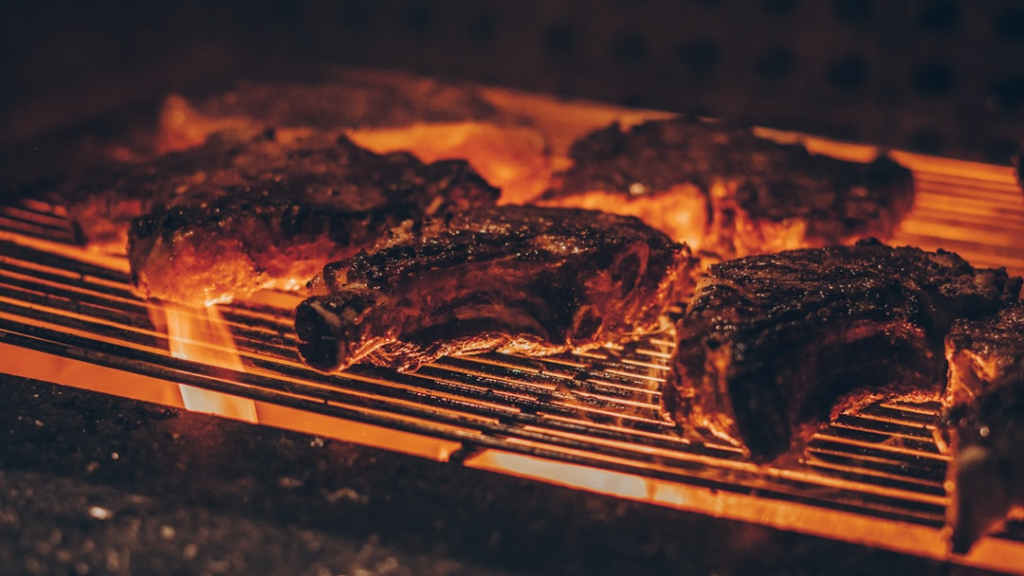
Direct Heat
Direct heat means the food sits over the active burner or coals. Use it for searing steaks, burgers, thin chops, vegetables and anything that cooks quickly while benefiting from browning.
Indirect Heat
Indirect heat moves the food away from the active heat source and turns a covered grill into a simple outdoor oven. It is useful for chicken pieces, thicker steaks, roasts and foods that need more time without constant scorching.
On charcoal, bank the coals to one side or split them around an empty center. On gas, run one or more burners and leave another section off or lower. Keep the lid closed when finishing indirectly.
Why two zones matter: grilling rarely goes exactly to plan. A burger may brown faster than expected, a chicken piece may be thicker than the others, or a flare-up may start under fatty food. A cooler zone gives you somewhere to move the food immediately without stopping the cook. That extra control is what makes the method useful even for quick weeknight grilling.
For steaks and chops, sear over direct heat and move to indirect heat to finish the center. For chicken, start with controlled browning and use indirect heat for the slower part of the cook. For vegetables, keep delicate pieces away from the hottest section while denser vegetables can spend more time near direct heat. With charcoal, you can also use the indirect side as a holding area while batches finish.
Vent position and lid use matter too. On charcoal grills, airflow controls how strongly the fire burns; on gas grills, burner settings define the zones. Avoid constantly opening the lid during indirect cooking because that releases heat and makes timing less predictable.
See the method in action in our two-zone steak guide, and compare grill sizes in What Size Grill Do I Need?. If you are deciding between fuel types, our Gas vs Charcoal Grill comparison explains how heat control differs between them.