Safe Meat Temperature Guide for Grilling & Smoking
Good barbecue is about tenderness, smoke and timing — but food safety comes first. The safest way to know whether meat and poultry have reached a safe internal temperature is to use a food thermometer rather than relying on color or cooking time.
This guide uses current USDA Food Safety and Inspection Service guidance for minimum safe internal temperatures.
USDA Safe Minimum Internal Temperatures
Beef, pork, lamb and veal steaks, chops and roasts: 145°F (62.8°C), followed by at least a 3-minute rest.
Ground beef, pork, lamb and veal: 160°F (71.1°C).
All poultry, including chicken, turkey and ground poultry: 165°F (73.9°C).
These are minimum safe temperatures, not necessarily the temperature that gives every cut its best barbecue texture. A brisket or pork shoulder, for example, is normally cooked well beyond the minimum safe temperature because connective tissue needs more time and heat to soften.
Where to Insert the Thermometer
Measure in the thickest part of the food and avoid touching bone, large pockets of fat or the cooking grate. For thin foods such as burgers or chicken breasts, inserting the probe from the side can help you reach the true center.
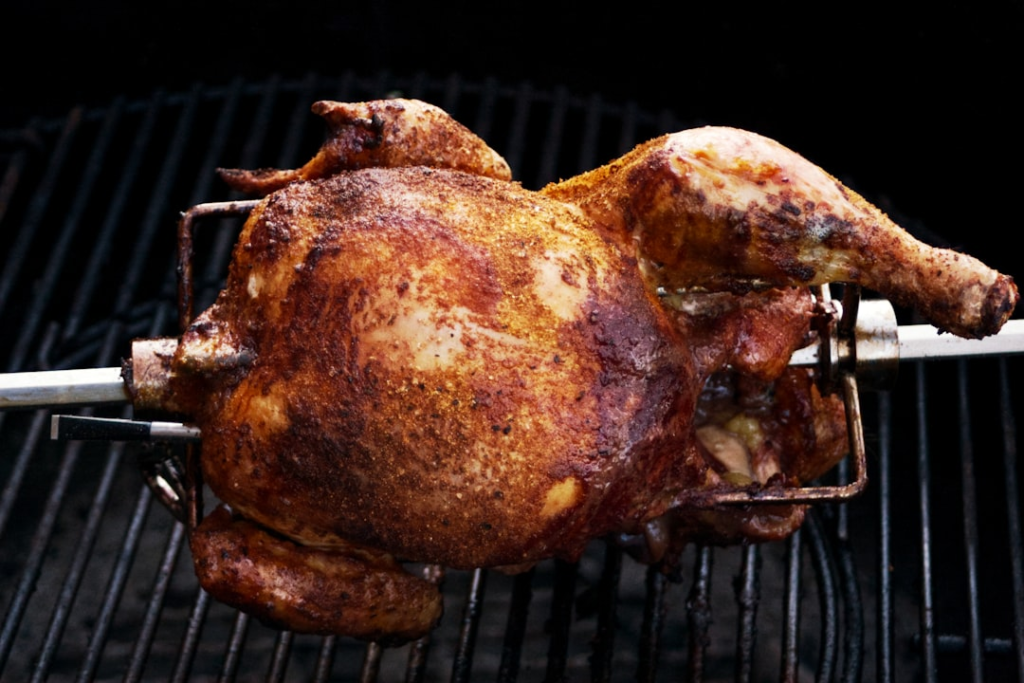
For whole poultry, USDA guidance says to check the innermost part of the thigh and wing and the thickest part of the breast.
Why Color Is Not a Reliable Safety Test
Meat can look pink and still be safe, or look fully cooked before the center has reached a safe temperature. USDA specifically advises using a food thermometer because color and appearance are not reliable indicators that harmful bacteria have been destroyed.
Instant-Read vs. Leave-In Thermometers
An instant-read thermometer is ideal for checking steaks, burgers, chops and chicken pieces. A leave-in probe is more convenient for long cooks such as turkey, pork shoulder and brisket because you can monitor temperature without repeatedly opening the grill or smoker.
If you are choosing a thermometer, See Our Best Meat Thermometers for 2026 → guide.
Food Safety Temperature vs. BBQ Finishing Temperature
It helps to separate two ideas: safe minimum temperature and the temperature where a particular cut becomes tender. Whole cuts of beef and pork may be safe at 145°F with the required rest, while tough barbecue cuts often need substantially more cooking to reach the texture you want.
That is why a thermometer is useful for more than safety. It tells you where the cook is, helps you repeat successful results, and reduces the temptation to judge doneness by time alone.
Quick Safety Checklist
Use clean utensils for cooked food, keep raw meat separate from ready-to-eat food, wash hands and surfaces after handling raw meat, and refrigerate leftovers promptly. When cooking mixed foods that have been in contact with raw poultry, use the poultry-safe temperature as your minimum target.
Source: USDA Food Safety and Inspection Service — Safe Internal Temperatures.
This article provides general food-safety information and does not replace official government guidance. Check USDA/FSIS for current recommendations.