Portable Grill Safety for Camping, Boating & RV Travel
Portable grills make outdoor cooking easy, but the same compact design puts heat, fuel and grease close to vehicles, tents, boats and dry vegetation. A few simple rules prevent most problems.
Bottom line: use grills only outdoors in a stable, open area, follow the manufacturer’s clearance instructions and never assume a campsite or marina permits open-flame cooking.
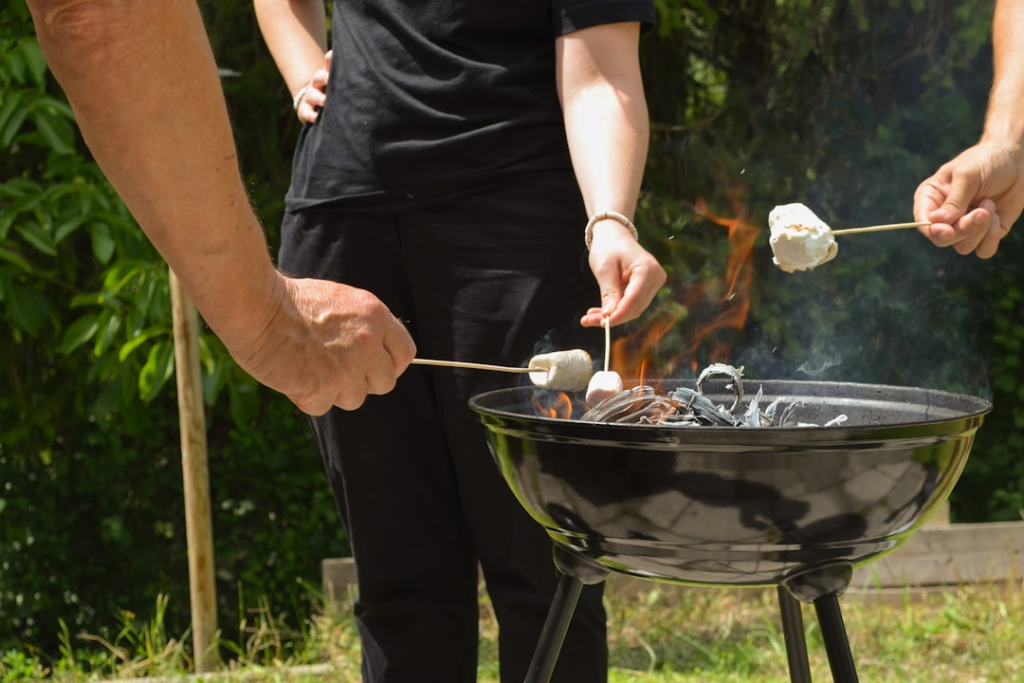
Photo by Myles Tan on Unsplash.
Seven Rules to Follow Every Time
1. Grill outdoors only. Never use propane, charcoal or pellet grills inside an RV, tent, cabin, garage or enclosed boat space.
2. Use stable ground. Set tabletop grills on a heat-resistant surface where they cannot tip.
3. Respect clearance. Keep the grill away from awnings, tents, dry grass, rail covers and other combustibles.
4. Inspect fuel connections. Check propane cylinders, hoses, valves and seals before lighting.
5. Control grease. Empty and clean grease trays so flare-ups do not travel outside the cookbox.
6. Extinguish completely. Charcoal and ash can stay dangerously hot for hours.
7. Check local restrictions. Fire bans, marina rules and park regulations override your cooking plans.
Special Considerations for Boats
Use only a grill and mounting system intended for marine use. Keep flame and hot surfaces clear of fuel fills, vents, canvas and lines. Some marine mounts are designed for grilling only while anchored or moored, so follow the grill and mount instructions exactly.
See Our BestPortable Boat Grills for 2026 → for marine-specific options.
Camping and RV Safety
Never grill under an RV awning or next to a tent wall. Position the grill where smoke and heat move away from sleeping areas and vehicles. When fire restrictions are high, a propane stove may be allowed when charcoal is not — but always verify the current rule before lighting anything.
Related: Portable Grill vs Camping Stove.